WORKFLOW FOR TEAMS
Faxing by industry and document type
Choose an industry workflow by its documents, ownership model, system connections, exception handling, and retention requirements.
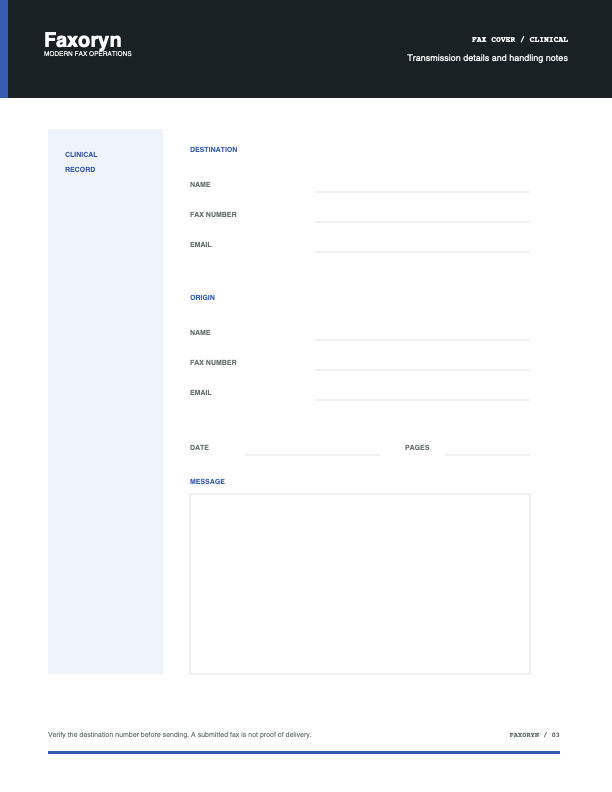
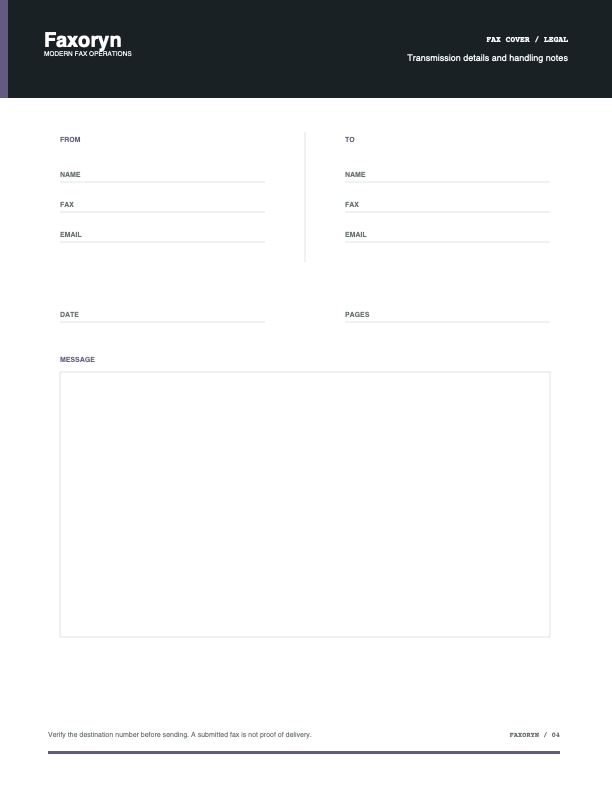
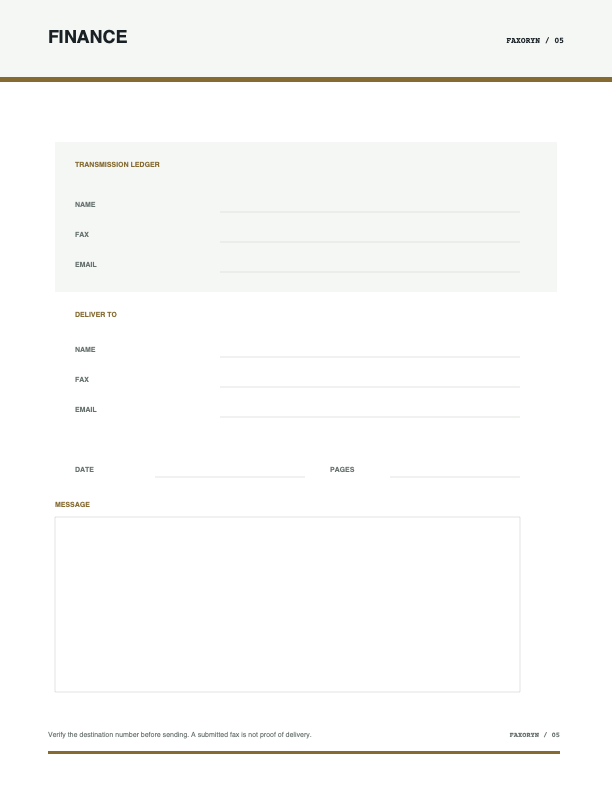
12 WORKFLOW PATTERNS
Start with the document your team must move.
Choose the closest workflow, then adapt ownership, integrations, exceptions, and record-keeping to your organization.
HOW TO USE THE LIBRARY
Match the document, owner, fallback, and proof.
Choose the sector whose document flow most closely resembles the work, even when the organization uses a different label. Review who prepares the record, who receives it, who owns follow-up, and what evidence closes the task.
Then validate the pattern against your current contracts, settings, record-keeping policy, and legal obligations. These pages describe example workflows; they do not certify a rollout or replace a live review.
WORKFLOW CATALOG
Start with the document and responsible team
The industry library covers education, enterprise, finance, government, healthcare, high tech, insurance, legal, manufacturing, nonprofit, real estate, and small business workflows.
These pages describe operating patterns, not customer endorsements or automatic compliance. Choose the closest document and ownership model, then adapt it to the organization's real systems and obligations.
- Identify recurring document types and verified destinations.
- Assign incoming work, outgoing approval, and failed-delivery follow-up.
- Map number access, notifications, integrations, and saved record.
IMPLEMENTATION
Run one real path before moving the whole operation
Use sample documents to check file preview, recipient review, number routing, member access, notifications, final states, and support escalation.
A successful send is only one case. Include unread intake, invalid destinations, failed delivery, revoked access, and carrier downtime in the run.
- 01List numbers, documents, people, and connected systems.
- 02Define who owns each workflow and what proves it is done.
- 03Run one successful and one failed send with real documents.
- 04Approve cutover, retention, monitoring, and rollback controls.
COMPLIANCE BOUNDARY
Treat regulatory fit as a deployment decision
Regulatory obligations depend on the operating company, customer role, jurisdiction, document content, vendor contracts, live settings, and internal process. Product branding cannot establish compliance by itself.
CHOOSE THE CLOSEST PATTERN
Compare document, owner, deadline, and saved record
An industry label is only a starting point. Two teams in the same sector can have different number ownership, approval, notification, retention, and escalation needs, while teams in different sectors may share the same intake pattern.
Choose the workflow whose documents and final result match the real operation. Then document where the fax begins, who reviews it, how the destination is confirmed, who handles failure, and which final record allows the next business step to continue.
- Use an inbound pattern when receipt and assignment start the work.
- Use an outbound pattern when approval and delivery record complete the work.
- Use an integrated pattern when another system owns the case or transaction.
CUTOVER EVIDENCE
Prove the route before retiring an established process
Try real files, long documents, covers, international destinations where relevant, unread intake, failed delivery, duplicate events, revoked member access, and carrier downtime. A single successful send cannot prove the operating model.
Record the numbers in use, responsible members, notification destinations, integration owners, retention decision, support contact, rollback path, and final approval. Keep former routing active until the replacement is verified when carrier and business constraints permit it.
COMMON QUESTIONS
Details to check before you continue.
Which industry workflow should a team start with?
Choose the page that matches the documents you handle, who is responsible for them, and how your team works. Adapt the steps to your own process.
Are these customer case studies?
No. They describe how teams use fax, not customer results. They do not claim a customer relationship, endorsement, or measured result.
Does choosing an industry page make the workflow compliant?
Compliance depends on your jurisdiction, contracts, who handles what, and how you actually run the process.
What should you check before relying on an industry workflow?
Check the documents you send, the destinations, who has number access, who gets notified, and how you see delivered or failed states. Also check how long records are kept and what happens when a delivery fails.
START WITH THE DOCUMENT